Rating: 2,5|Votes: 4
Thousands of Russian Orthodox Church followers plunged Tuesday into icy rivers and ponds across the country to mark the upcoming Epiphany, cleansing themselves with water deemed holy for the day.
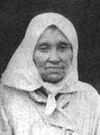
Nun Seraphima (Bulgakova)
“It is not wondrous that it has not reached 700 feet near my hut, but it is wondrous that my death will be like the death of the seven youths of Ephasus, who slept for three hundred years in the cave. Just as they arose in affirmation of the General Resurrection, so will I arise before the end [of the world] and lie down in Diveyevo. Diveyevo will not be named for the village Diveyevo, but for the worldwide wonder.”
Rating: 8,3|Votes: 24
"He who truly loves God considers himself a wanderer and newcomer on earth, for in him is a striving towards God in soul and mind, which contemplates God alone." Certain people emerge as standouts in the church. Their chief characteristic is the search to live in the presence of God with every fiber of their being, and to recognize God's presence in creation and humanity. Such a saint was Seraphim of Sarov, author of the saying quoted above.
Rating: 10|Votes: 4
The following descriptions of Diveyevo Convent before and after the Bolshevik revolution are remarkable in that they are the personal recollections of two nuns who were novices in the Convent before it was closed by the Communists.
Rating: 7,8|Votes: 5
In many Greek homes, a special cake is baked on the eve of St. Basil's Day (January 1st) with a gold or silver coin hidden inside. In the evening, just before midnight strikes and the new [calendar] year begins, all the lights are turned off for a minute to signify the dawning of a New Year. The family gaily exchanges wishes for "A Happy New Year!" and the cake is cut: one slice for St. Basil, one for each family member, one for each of the pets, and then the largest slice of all is cut for the poor people of the world. In one of these slices is hidden the coin, which brings blessings to its recipient throughout the year.